


Nature, rice fields, and tradition in the heart of the Albufera
Embraced by the Turia River, between rice fields, centuries-old irrigation channels, and the serenity of the Albufera Natural Park, lies one of Valencia's most authentic and unique corners: Pobles del Sud. This district brings together eight sub-districts with a traditional flair: La Punta, Faitanar, La Torre, El Forn d'Alcedo, Castellar-l'Oliveral, Pinedo, El Saler, El Palmar, and El Perellonet. Bound together by the Valencian fertile orchards (huerta) and the Albufera, these towns offer a distinct experience where nature, sports, and gastronomy meet.
What to see in the Pobles del Sud
Heritage with a rural essence
In Pobles del Sud, the landscape is culture. Exploring its paths, you will discover traditional farmhouses (alquerías), Valencian barracas (thatched houses), rice drying sheds, and threshing floors where rice was once separated from the straw. You'll also find a network of irrigation channels (acequias) that have watered the fields for centuries, thanks to the hydraulic wisdom inherited from the Moorish era. The main channels originate from the Júcar River (Acequia Real del Xúquer) and the Turia (Acequia de Favara), though there are also natural contributions from field drainage (escorredors) or freshwater springs (ullals) found in the marshlands.
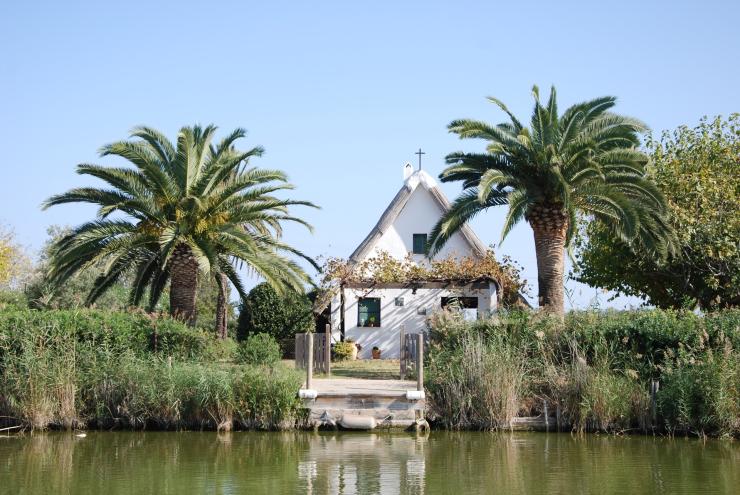
The engines (motores), small buildings still in use, continue to distribute water between the canals and the rice fields. A great example is the engine at Casa de la Pipa, which has now been converted into an environmental education center.

The district is also dotted with ancient "ceberas"—small wooden structures inspired by the Valencian barraca, used to store onions and prevent them from spoiling.
In every village, the town center is organized around its church, which serves as the heart of the community. Highlights include the eclectic church in La Punta, designed by Francisco Mora (architect of the Colón Market); the neo-Gothic church in Horno de Alcedo, a work by the architect Goerlich; and the Nuestra Señora del Rosario de Lepanto in Castellar-Oliveral, home to the unique "Cant de la Carxofa" festival every September. Surrounding these, the urban fabric mostly consists of traditional one or two-story houses with gabled Arabic tile roofs and rear courtyards. Although many of these houses have been modified over time—with updates to facades, structures, and finishes—they still retain their original essence.
What to do in the Pobles del Sud
Explore, pedal, and sail. Bike routes, hiking, and traditional boat trips.

Bike route between rice fields and the sea
Follow the bike lane from the City of Arts and Sciences to the Albufera and pedal among marshes, rice fields, and natural beaches.
Bike routes
Hiking in the Natural Park
Immerse yourself in marked trails to go birdwatching, photograph sunsets, and enjoy the silence of the wetlands.
Hiking routes
Traditional boat trip
Set sail from El Palmar, El Saler, or the Gola de Pujol and discover the Albufera from the water at the most authentic pace.
"Albuferenc" boat trips
A beach day in the heart of nature
Relax on pristine beaches with protected dunes and pine forests, far from the urban hustle and surrounded by natural landscapes.
Beaches
Birdwatching in the Albufera
Spot flamingos, herons, and migratory birds in one of Europe’s most important wetlands.
Birdwatching
Sunset over the lagoon
Witness one of Valencia’s most famous sunsets, with the sun reflecting over the water and the rice fields.
Where to eat in the Pobles del Sud
The birthplace of paella and authentic all i pebre. Taste a paella cooked right by the Albufera, an arròs del senyoret (peeled seafood rice), or the traditional all i pebre (eel and potato stew) in restaurants with a true local essence.


Experiences in the Pobles del Sud


Albufera Tourist Bus with boat trip and paella lunch in Albufera Nature Park


Guided bike tour to the Albufera with horchata and fartons tasting
How to get there
El Palmar, Valencia, España