

Valencia: The Great Natural Pantry of the Mediterranean
Few cities have the privilege of having large natural pantries to source from and provide seasonal products that leave almost no footprint on the planet.
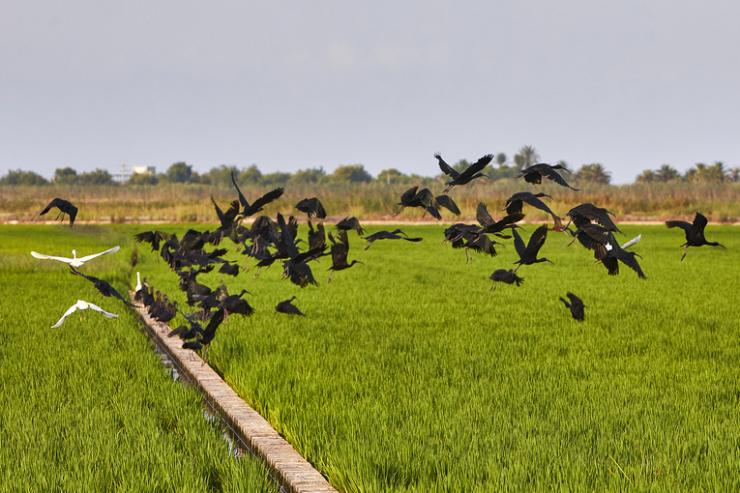
A peri-urban orchard surrounds Valencia with thousands of square meters of vegetable and fruit fields. It extends to the Albufera Natural Park, where various local varieties of rice are grown, serving as the main ingredient for the most international Valencian dish: paella.
The Ecotira
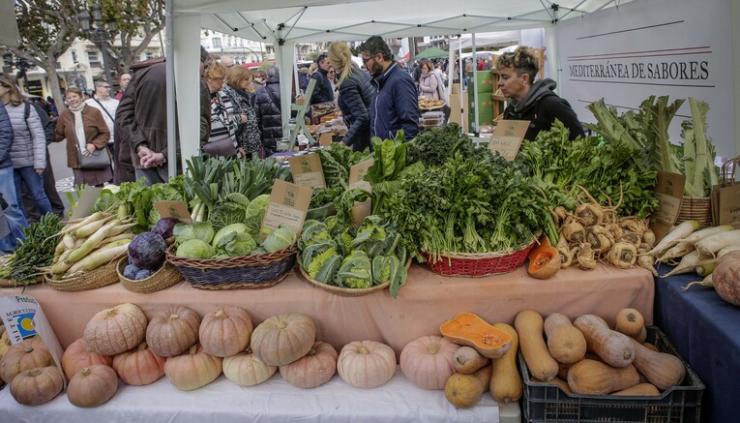
Small-scale farmers from the Valencian orchard have the Ecotira, their own space for the direct sale of organic products at Mercavalència. This is the central infrastructure that distributes local goods to professionals in the sector, such as restaurants and food retailers.
L’Horta
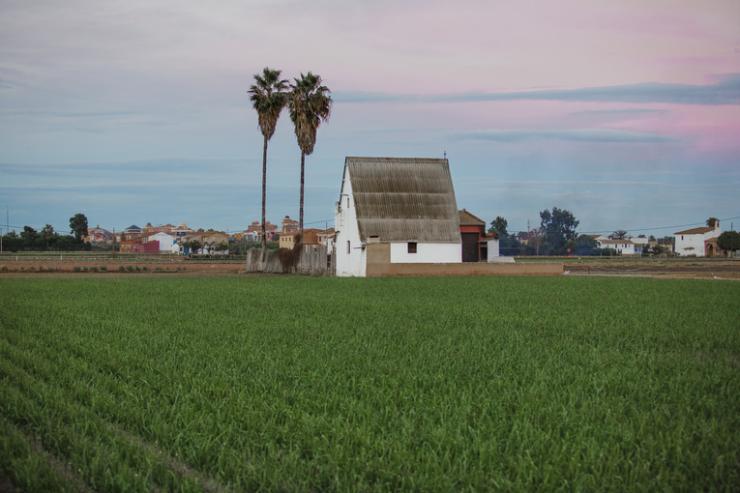
Furthermore, L’Horta de Valencia establishes a link between the rural and the urban where agricultural and hydraulic cultures coexist. As a result, it has been recognized by the Food and Agriculture Organization of the United Nations (FAO) as one of the seven GIAHS (Globally Important Agricultural Heritage Systems) in all of Europe.
The Sea
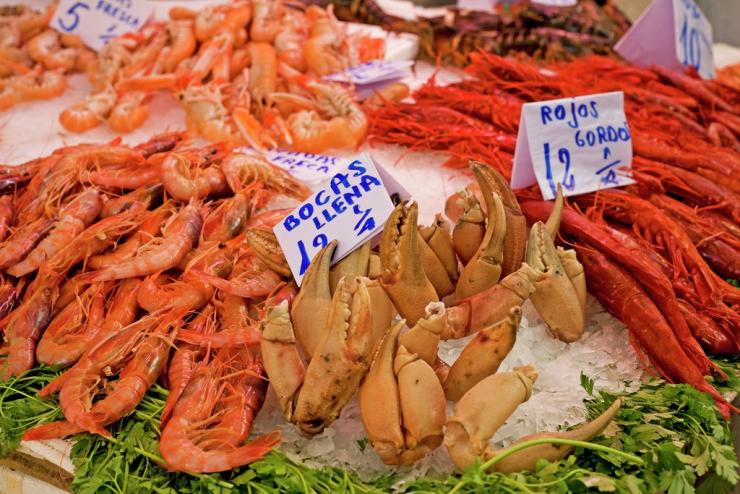
The Mediterranean Sea provides fresh fish that is auctioned daily at the Fishermen's Guild (Lonja de Pescadores) in the Marina de València, ending up on the menus of many local restaurants or on the shelves of supermarkets and municipal markets.
Urban Beekeeping
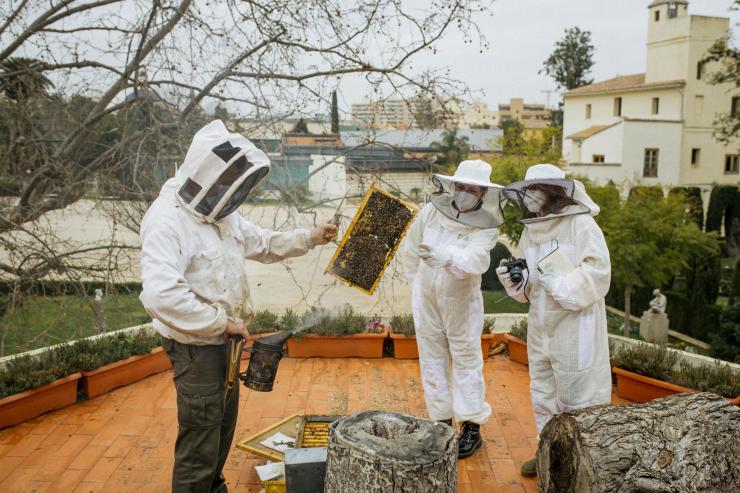
Recently, Valencia has embraced urban beekeeping, joining its two other natural pantries, L’Horta and the Mediterranean. Around twenty beehives are scattered across the rooftops of public buildings to pollinate and contribute to the biodiversity of the city's parks. The harvested honey, about 40 kilos per year, is starting to be used as an ingredient in dishes at some of the city's restaurants.
Valencia: Headquarters of the World Centre for Sustainable Urban Food
But Valencia's commitment to food sustainability goes much further; since 2019, it has been the headquarters of the FAO's World Centre for Sustainable Urban Food (CEMAS), becoming a benchmark for the challenges that large cities face regarding food and nutritional issues.


